What Is a Bond Hearing: MN Court Steps and Bail Decisions
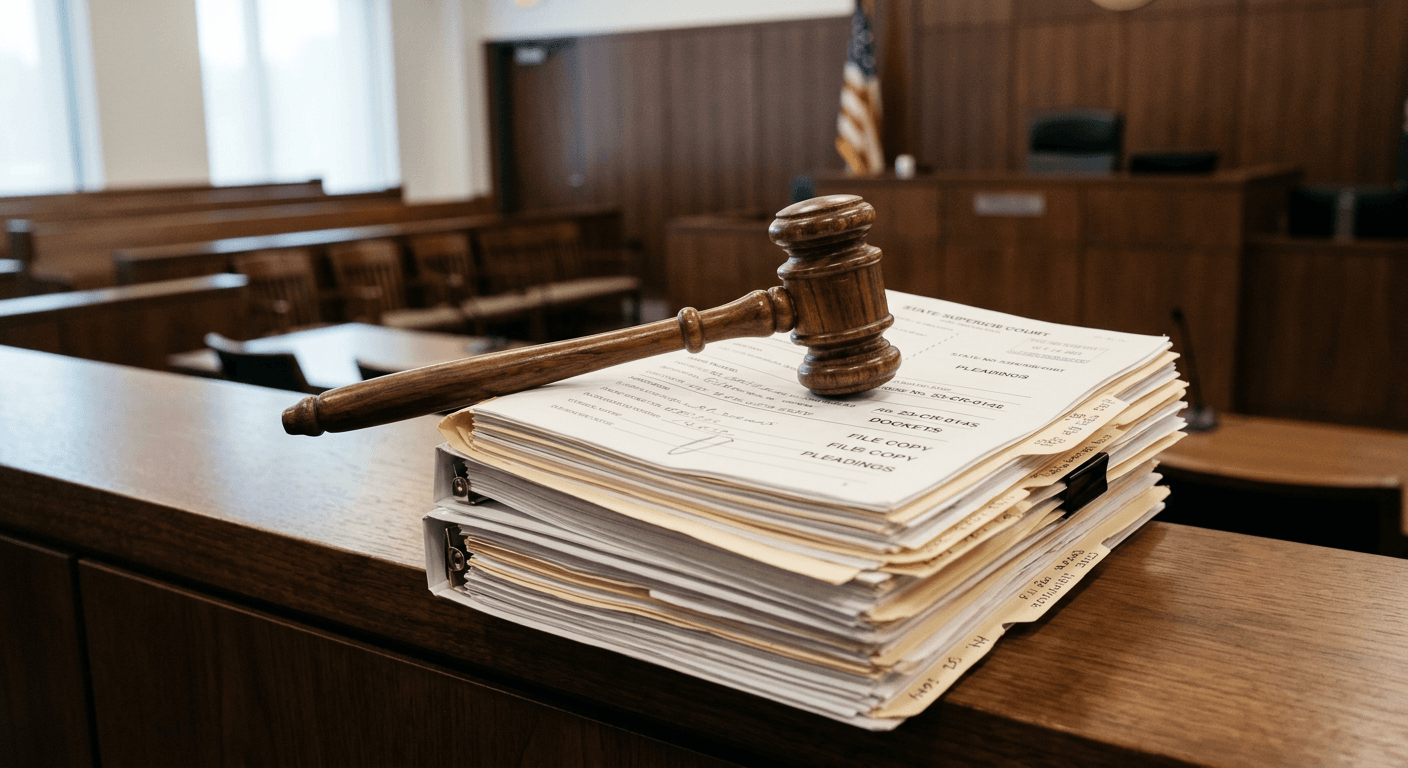
The timeline from booking to the courtroom dictates exactly when a defendant can return to their job, care for their family, and begin building a legal defense. Understanding what is a bond hearing prevents families from scrambling at the last minute when the court finally issues a release amount. This proceeding is a rapid, procedural checkpoint where a judge weighs public safety and flight risk against a person's constitutional right to pre-trial freedom. By preparing for this specific court appearance ahead of time, defendants can secure favorable release terms, avoid restrictive monitoring conditions, and ensure that a surety agent is ready to process the paperwork the moment the gavel falls.
Quick Summary
A bond hearing is a preliminary court appearance where a judge determines if a defendant can be released from custody before trial and sets the financial conditions for that freedom. In Minnesota, this proceeding directly dictates whether the accused leaves jail on a surety bond or remains incarcerated.
- Minnesota courts use strict 36-hour and 48-hour statutory clocks to schedule initial appearances.
- Judges evaluate public safety risks, prior warrants, and local community ties.
- The court frequently issues two distinct bail amounts: conditional and unconditional.
- Securing a surety agent before the court date accelerates the physical release process.
Table of Contents
- What is a bond hearing and how it dictates pre-trial freedom
- 1. Track the arrest timeline and calculate the hearing window
- 2. Gather community ties and employment data for the defense
- 3. Navigate the prosecutor's public safety assessment
- 4. Choose between conditional and unconditional bail offers
- 5. Execute the surety agreement and post the bond
- Common Pitfalls & Troubleshooting
- FAQ
- Recommended Reads
What is a bond hearing and how it dictates pre-trial freedom
At its core, a bail hearing is the official judicial proceeding where the court evaluates the necessity of keeping an individual in custody pending the resolution of their criminal case. In Minnesota, the primary objective is ensuring the defendant returns for future court dates without posing a threat to the community in the interim. The presiding judge reviews the initial charging documents, listens to brief arguments from both the state prosecutor and the defense counsel, and establishes the financial threshold required for release. This is the exact moment when the abstract concept of bail becomes a concrete dollar figure.
1. Track the arrest timeline and calculate the hearing window
The 36-hour and 48-hour rules force the schedule
Minnesota operates on strict statutory clocks following any arrest. If law enforcement arrests an individual without an active warrant, the state must establish probable cause within 48 hours to justify the continued detention. Furthermore, under the Minnesota Rules of Criminal Procedure, the defendant must physically appear before a judge within 36 hours. However, the calculation of this 36-hour rule explicitly excludes the day of arrest, Sundays, and legal holidays.
This legal math creates significant delays. This scheduling gap is where families waste the most critical time. Instead of waiting passively for the court date to figure out the financial requirements, proactive preparation is required. Families should use this holding window to locate the exact booking information, determine the statutory maximums for the cited charges, and secure legal representation. The timeline forces a tight turnaround once the judge finally reads the bail schedule onto the record. Understanding exactly what is a bail/bond hearing allows the defense to gather mitigating evidence while the clock ticks down.
Practical rule: Do not wait for the judge to set the exact dollar amount before contacting a professional bonding agency; establishing the surety relationship during the 36-hour waiting period cuts the physical release time by several hours once the court issues the final order.
2. Gather community ties and employment data for the defense
Financial and local roots counter the flight risk claim
At the core of what is a bond appearance hearing is a rapid risk assessment. The judge is not evaluating guilt or innocence during this appearance. They are assessing two highly specific variables: the mathematical probability that the defendant will fail to appear for future court dates, and the potential danger the defendant poses to the public. Defense attorneys use this narrow window to present mitigating factors that prove stability.
This includes documented proof of steady employment, homeownership, long-term residence in the area, and deep family ties. Families must gather this documentation - recent pay stubs, signed lease agreements, utility bills, and character references - and provide it to the defense attorney well before the proceeding begins. Presenting a documented case for strong community ties actively drives down the presumed flight risk, which in turn directly influences the final financial requirement set by the court. Relying on verbal promises rather than hard paperwork routinely results in higher financial requirements.
3. Navigate the prosecutor's public safety assessment
What happens at a bond hearing when prior offenses surface
Prosecutors approach the proceeding with a specific focus. They analyze prior criminal history and the inherent severity of the current charges. The state's attorney reads the probable cause statement into the record. They immediately highlight any previous failures to appear in court. Active warrants from other jurisdictions or ongoing probation violations also surface. The prosecutor heavily emphasizes public safety concerns for common offenses. They focus on any aggravating factors present. These include a high blood alcohol concentration or property damage. Prior impaired driving convictions on the individual's record receive equal attention.
Knowing what is a bond arraignment requires understanding that the prosecuting attorney will almost always request a high monetary amount or stringent release conditions to shield the county from liability. Many Minnesota counties utilize a pretrial release evaluation form - a standardized scoring system that ranks the defendant's risk based on prior convictions, age at first arrest, and employment status. The defense must counter these objective scores in real-time. Because the prosecutor is actively building a case for maximum security, what happens at a bond hearing must never include the defendant speaking directly to the judge about the facts of the arrest. Anything said during this appearance is officially on the record and can be leveraged by the prosecution during the actual trial phase.
4. Choose between conditional and unconditional bail offers
Unconditional release removes EHM and check-ins
In Minnesota, judges routinely set a two-tiered financial structure: conditional and unconditional. A conditional amount is typically set at a lower dollar figure, but it forces the defendant to comply with strict, highly invasive, and often expensive pre-trial requirements. These court-ordered conditions frequently include the installation of electronic home monitoring (EHM) equipment, random urinalysis (UAs), mandatory daytime check-ins with pre-trial service officers, geographic travel restrictions, and absolute sobriety requirements.
Conversely, unconditional bail demands a higher dollar figure. This is often the maximum statutory amount allowed for the charged offense. It releases the defendant with almost no restrictions. The only mandate is appearing for future court dates. Families must evaluate the long-term financial and logistical cost of these two options. Paying directly out of pocket for daily EHM equipment and monitoring fees adds up. This expense, combined with the lost wages from missing work for random midday drug testing, frequently exceeds the upfront cost of securing an unconditional bond. Choosing the unconditional route severs the daily surveillance of the court system entirely. It allows the defendant to maintain their employment, keep their housing secure, and live normally while awaiting trial. They avoid navigating a minefield of technical violations that could land them back in custody.
5. Execute the surety agreement and post the bond
The physical transfer of paperwork at the jail facility
The judge issues the release order. Court administration immediately updates the electronic file. The physical release process shifts entirely to the jail facility holding the inmate. Families do not need to produce the full unconditional bail amount in liquid cash to secure freedom. Standard financial terms govern professional bonding operations in Minnesota. By law, these terms include 3%-5% down on qualifying bonds, no credit checks, and flexible payment plans.
The indemnitor - usually a family member or close friend - signs a legally binding surety contract, paying the non-refundable premium to the agent. This legal document guarantees the full monetary amount to the court if the defendant decides to flee the state. Once the jail administration accepts and verifies the bond, they begin the out-processing procedures. This includes returning confiscated personal property, verifying identification databases one final time, and escorting the individual out of the secure holding area. This final administrative step typically takes one to two hours, governed heavily by the facility's shift changes, meal times, and periodic lockdown schedules.
Common Pitfalls & Troubleshooting
Navigating the criminal justice system without preparation leads to unnecessary incarceration time and inflated costs. Recognize these specific failure modes to streamline the release process.
Failure 1: Treating the initial appearance as a trial
Symptom: The defendant attempts to explain the nuanced circumstances of the arrest directly to the judge, arguing that the police officers made a mistake or that the underlying charges are entirely false. Fix: Instruct the defendant to remain completely silent during the proceeding unless directly asked a procedural question by the presiding judge. The only legal issue at hand during this stage is flight risk; arguing facts only aggravates the court, damages the defense attorney's strategy, and reliably increases the financial requirement.
Failure 2: Underestimating the total cost of conditional release
Symptom: The family aggressively pursues the lower conditional amount to save money upfront, only to find the defendant cannot afford the recurring daily EHM fees or loses their employment due to mandatory, unannounced daytime check-ins. Fix: Calculate the projected costs of monitoring fees, drug testing laboratory costs, and lost wages over an estimated six-month pre-trial period. If those cumulative costs exceed the premium of a standard surety bond, secure the unconditional option immediately to protect the defendant's livelihood and freedom of movement.
Failure 3: Scrambling for full cash instead of securing a surety agent
Symptom: The family spends days trying to pool thousands of dollars in cash to pay the full amount directly to court administration, leaving the defendant sitting in a county holding cell unnecessarily while savings accounts are drained. Fix: Utilize a licensed surety agent immediately. The family only needs to provide the legally required fractional down payment, allowing the defendant to be released on a manageable payment plan without liquidating critical emergency savings or maxing out high-interest credit cards.
Failure 4: Missing the weekend administrative processing window
Symptom: A judge sets the release conditions late on a Friday afternoon, but the family waits until Saturday morning to coordinate the paperwork, only to find court administration closed and jail staff operating on skeletal weekend shifts. Fix: Coordinate the financial arrangements with a 24/7 bonding agency before the Friday calendar call concludes. This allows the agent to execute the paperwork and deliver it to the holding facility before Friday evening shift changes stall the release queue until Monday morning.
FAQ
How long does a bail review hearing take in Minnesota?
The actual time spent standing in front of the presiding judge is extraordinarily brief, usually lasting less than five minutes. However, a defendant may wait in a holding cell for several hours while the court works through a congested daily calendar of dozens of other initial appearances and arraignments.
Can a judge deny bail entirely at a bond hearing?
In Minnesota, defendants are generally entitled to pretrial release for the vast majority of offenses under the state constitution. However, a judge possesses the discretion to set the financial requirement prohibitively high based on extreme public safety risks. In highly specific cases involving capital offenses or severe, documented flight risks, the court can order the defendant held without bail entirely.
Do I need the full bail amount in cash to secure a release?
No. While individuals have the legal right to pay the entire exacted amount in cash directly to the court administration, most families utilize a professional bonding agency. You pay a small fraction of the total amount as a premium, and the agency files a corporate surety guarantee for the full amount to secure the immediate release.
What is the difference between conditional and unconditional bail in MN?
Conditional bail features a lower upfront monetary requirement but legally mandates compliance with strict, court-ordered rules like electronic home monitoring, travel restrictions, and frequent drug testing. Unconditional bail requires a higher financial guarantee but releases the individual with no pre-trial restrictions other than the legal duty to appear for all future court dates.