Secured Bail vs Unsecured: Understanding Financial Obligations in Minnesota
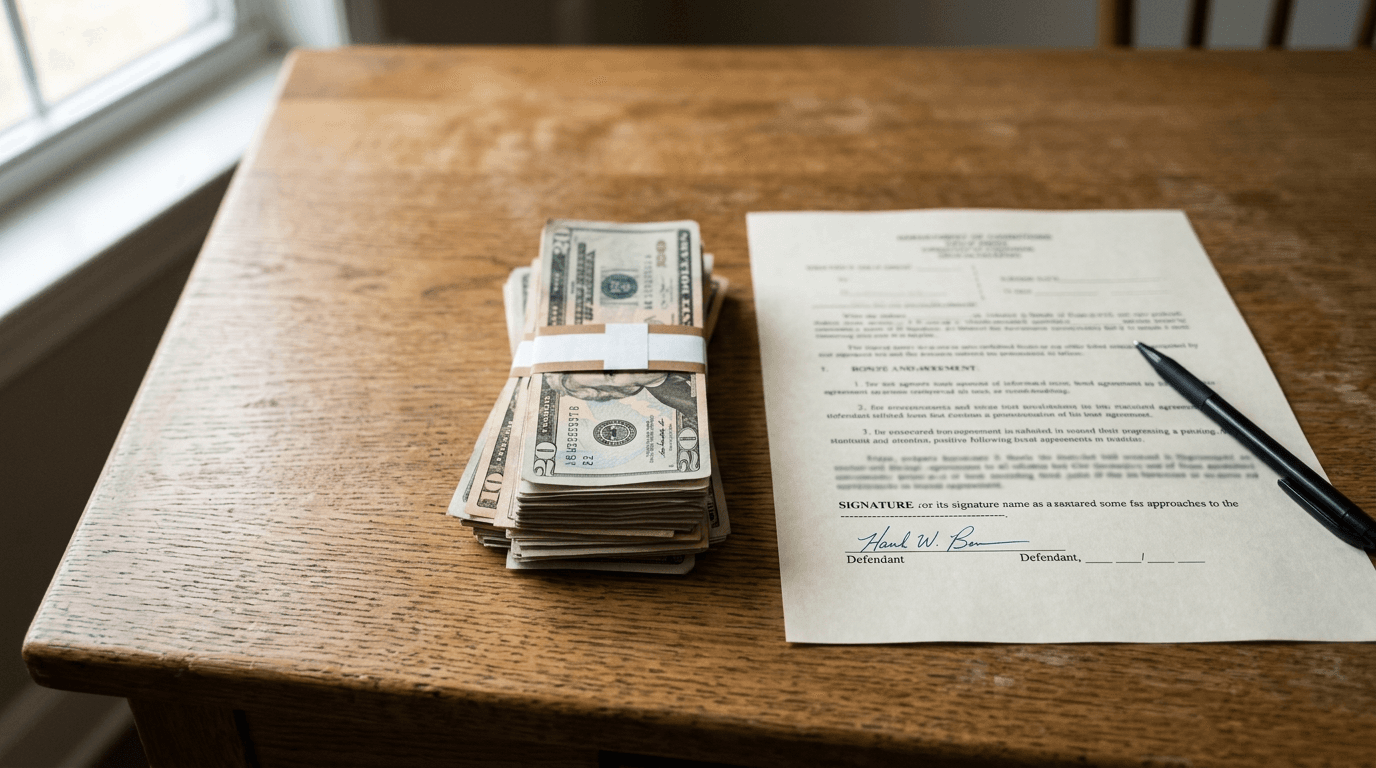
Looking at a release order from a judge at the Anoka County Jail and seeing different monetary conditions attached to your loved one's name can be paralyzing. The court will outline specific amounts, but knowing the difference between secured bail vs unsecured bonds dictates whether you need to hand over the full amount in cash immediately, hire a professional to post it, or simply sign a promise to return. These terms represent entirely different financial liabilities, and misunderstanding them can either drain your family's savings unnecessarily or leave someone sitting in a cell when they could have been released hours ago.
Quick Summary
The primary difference between secured and unsecured bail lies in what the court demands before a defendant is released. Secured bail requires upfront financial backing, either through cash or a surety bond, while unsecured bail relies on a signed agreement to pay a specified amount only if the defendant fails to appear.
- Secured bail demands immediate financial collateral before jail release.
- Unsecured bonds require only a signature, acting as a financial penalty for failing to appear.
- Surety bonds allow a third party to post the secured amount for a non-refundable premium.
- Minnesota law allows 3%-5% down on qualifying bonds with no credit check.
- Violating the conditions of either bond type results in immediate warrants and financial liability.
Table of Contents
- Secured bail vs unsecured: The financial mechanics of release
- What does an unsecured bond mean in a Minnesota courtroom
- What is a unsecured bond for jail release conditions
- Cash bond vs bail: Managing the upfront capital
- Navigating surety options across Minnesota counties
- Why courts choose secured over unsecured release
- FAQ
- Recommended Reads
Secured bail vs unsecured: The financial mechanics of release
When a judge sets release conditions in a Minnesota court, they are calculating flight risk and public safety against a financial figure. The distinction between secured bail vs unsecured release fundamentally changes how you gather resources in those first critical hours after an arrest.
Secured bail means the court demands tangible proof of financial commitment before the jail doors open. The court holds this capital hostage to guarantee the defendant returns for every mandated hearing. If the defendant skips court, the court keeps the money. You satisfy this requirement either by delivering the total amount in cash to the court administrator or by utilizing a licensed bondsman who guarantees the full amount to the court on your behalf.
Unsecured bail requires no upfront payment. The court sets a specific dollar amount, but the defendant is released merely upon signing a legal document promising to appear in court and obey all release conditions. The financial figure only materializes as a debt if the defendant fails to show up or violates an order.
Practical rule: Never assume a high bond amount means you need to empty your retirement accounts; always verify if the judge offered an unsecured option or if a surety bond can satisfy the secured requirement before liquidating assets.
What does an unsecured bond mean in a Minnesota courtroom
Many defendants hear a dollar amount read from the bench and immediately panic, missing the critical word that precedes it. Understanding what does an unsecured bond mean requires looking at the legal contract being formed between the defendant and the state.
Choosing an unsecured bond functions effectively as an IOU. If a judge sets an unsecured bond in Chisago County, you do not pay any money to get out. You pay nothing upfront. Instead, you sign a binding agreement that you will owe the court the designated bond amount if you fail to appear for your next hearing or violate the terms of your release. This financial penalty is suspended over the defendant's head, triggered only by non-compliance.
This mechanism is often used when a judge determines that the defendant has strong ties to the community, maintains steady employment, and presents a low flight risk, but still requires a tangible financial deterrent to ensure they take the court dates seriously. The court recognizes that the defendant does not have the liquid capital to post the amount, but the threat of that debt is deemed sufficient motivation to comply. If the defendant fulfills all court obligations and the case is resolved, the unsecured bond dissolves entirely, and no money ever changes hands.
What is a unsecured bond for jail release conditions
To grasp what is a unsecured bond for jail release, you must look at the specific stipulations attached to the signature. The release is not simply a matter of walking out the door and waiting for a court date; it is heavily tethered to behavioral conditions.
Even without upfront payment, the unsecured bond remains a strict legal leash. The judge will typically attach standard conditions: remain law-abiding, make all court appearances, and maintain current address information with the court. For specific charges, such as a DWI, the court might attach additional requirements like chemical dependency evaluations or restrictions on alcohol use.
If law enforcement discovers a violation of these conditions, or if the defendant misses a hearing, the consequences are immediate. The court revokes the unsecured status, issues a bench warrant for arrest, and triggers the collection of the specified bond amount. At that point, the defendant will likely face a much higher, strictly secured bail requirement upon their return to custody, having proven that their signature alone is not a reliable guarantee.
Cash bond vs bail: Managing the upfront capital
When a judge refuses an unsecured option, defendants are left looking at a secured requirement. At this stage, families must evaluate cash bond vs bail to determine the most viable path to release.

A cash bond requires exactly what it sounds like: the full, exact amount of the bail set by the judge, paid directly to the court in cash or certified funds. If bail is $20,000, you must deliver $20,000. The court holds this money for the duration of the case. If the defendant attends all hearings and complies with all conditions, the money is returned at the end of the case, minus any court fees or fines the judge decides to deduct from it. However, coming up with tens of thousands of dollars in liquid cash within hours of an arrest is impossible for most families.
Bail, in the context of a surety bond, involves a specialized agent. Instead of posting the full $20,000 yourself, you pay a non-refundable premium to the bondsman. By law, 3%-5% down on qualifying bonds, no credit check, flexible payment plans dictate how these arrangements are structured in Minnesota. The bondsman then guarantees the full $20,000 to the court. You do not get the premium back at the end of the case - it is the fee for the service of using the agent's capital to secure the release.
| Feature | Cash Bond | Surety Bail Bond | Unsecured Bond |
|---|---|---|---|
| Upfront Cost | 100% of the total bail amount | Premium (e.g., 3-5% down on qualifying bonds) | $0 upfront |
| Refundability | Returned at case end (minus fines/fees) | Premium is non-refundable | N/A (No money paid) |
| Source of Funds | Defendant's or family's savings | Bail agent's guarantee to the court | Defendant's signature/promise |
| Risk to Family | Entire cash amount is tied up for months | Limited to the premium and any collateral | No upfront risk; debt only if defendant flees |
Navigating surety options across Minnesota counties
When a secured bond is mandated, the logistics of posting it vary slightly depending on where the defendant is held. The physical process of delivering the bond to the jail, the hours the facility accepts bonds, and the specific paperwork required can create delays if not handled by someone familiar with that specific facility's protocols.
Louis County. A professional bail agent understands these local nuances and coordinates directly with the jail staff to minimize the time between the bond being written and the defendant walking out the door.
This is particularly critical in cases involving specialized bonds, such as DWI charges. In these scenarios, the court often imposes unconditional bail amounts alongside conditional release options. Unconditional bail means the defendant posts a higher secured amount but avoids restrictive conditions like electronic monitoring.
Practical rule: Always ask the jail or your agent for the exact breakdown of conditional versus unconditional bail amounts before deciding which route to take, as the higher unconditional amount often saves you from expensive daily monitoring fees.
Why courts choose secured over unsecured release
Understanding why a judge assigns a specific type of bail helps in anticipating the financial hurdles ahead. The court's primary concerns are ensuring the defendant's appearance at future hearings and protecting the public from potential harm.
When a defendant has a history of missing court dates, active warrants in other counties, or ties to another state, the judge views an unsecured promise as insufficient. The risk of the defendant simply ignoring the debt and fleeing is too high. In these cases, demanding secured capital creates a strong anchor. If the defendant uses a bondsman, they also have the added pressure of the co-signer - usually a family member - who is now financially liable if the defendant runs.
The severity of the charges also plays a dominant role. High-level felonies or repeat offenses almost universally trigger secured bail requirements. The court uses the financial barrier not as a punishment, but as a proportionate measure of control. If you are dealing with a situation where a loved one is held in the Bail Bonds: CENTER CITY | Chisago County Jail, recognizing that the secured requirement is a standard judicial response to the charge's severity can help focus your efforts on managing the logistics of the bond rather than fighting an unwinnable battle over the release conditions.
FAQ
Can an unsecured bond be changed to a secured bond later?
Yes. If a defendant violates the conditions of their release, misses a court date, or picks up new charges, the judge will typically revoke the unsecured status, issue a warrant, and set a new, secured bail amount that must be paid for release.
Do I need a bondsman for an unsecured bond?
No. An unsecured bond only requires the defendant's signature promising to pay if they fail to appear. A bondsman is only necessary when the court requires a secured surety bond to guarantee release.
What happens to the 3%-5% down payment when the case is over?
The premium paid to a bail agent is non-refundable. It is the fee charged for the service of guaranteeing the full bond amount to the court, regardless of whether the defendant is found guilty or innocent.
Can I post a cash bond if I live out of state?
Yes, but the logistics are difficult. The cash must usually be delivered in person to the court administrator or jail in exact change or certified funds during specific hours, making a local surety agent the more practical option for out-of-state families.