Pine County Bail Bonds: What to Expect at the Pine City Jail
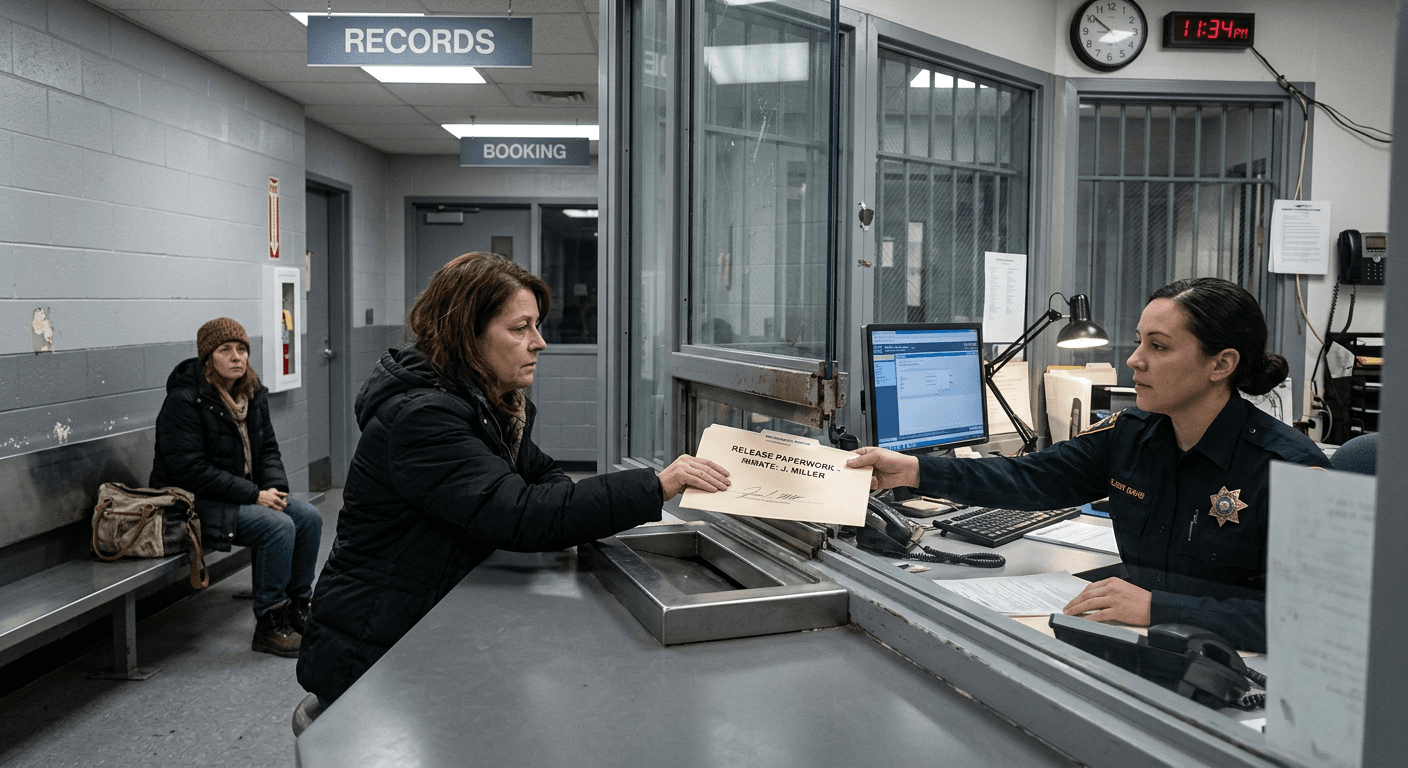
Standing at the dispatch glass inside the Pine County Sheriff's Office on Main Street South, the reality of a late-night arrest sets in immediately. The booking area is slow, the information provided by jail staff is strictly administrative, and every decision you make over the next few hours dictates whether someone goes home or remains in custody through the weekend. Securing pine county bail bonds requires understanding the exact intake procedures of the Pine City facility, rather than relying on assumptions about how the justice system works on television.
Navigating this system effectively comes down to two criteria: the speed at which the paperwork clears the local administrative hurdles, and the strict financial frameworks dictated by Minnesota law. Evaluating your options against these two constraints prevents you from signing a restrictive release agreement or paying unnecessary fees.
Quick Summary
Securing a release from the Pine City Jail requires navigating local booking delays, statutory financial limits, and unconditional release options. Minnesota regulates how surety agreements are funded and restricts immediate release for specific charges.
- Booking procedures must conclude before any surety agreement can be processed.
- Minnesota law strictly regulates minimum down payments for surety agreements.
- Unconditional bail costs more upfront but removes restrictive monitoring requirements.
- Active out-of-county warrants will halt a local release regardless of payment.
- A geographically distant agent adds hours of dead time to the release window.
Table of Contents
- 1. Securing pine county bail bonds during the intake process
- 2. Evaluating conditional and unconditional release paths
- 3. Financing the surety agreement
- 4. Managing active warrants in neighboring jurisdictions
- 5. Navigating mandatory holds for impaired driving
- 6. Coordinating physical delivery at the facility
- 7. Assuming co-signer liability
- Which release route fits your situation
- FAQ
- Recommended Reads
Summary of Jail Release Mechanics
| Process Phase | Mechanism | Primary Limitation | Action Required |
|---|---|---|---|
| Booking | LiveScan fingerprinting and property inventory | No surety agreement accepted until complete | Wait for the facility to assign a booking number |
| Bail Setting | Two-tiered system (Conditional vs. Unconditional) | Conditional requires EHM and check-ins | Review the defendant's employment flexibility |
| Financing | Statutory minimum payments | 3%-5% down is a legal floor, not a suggestion | Verify the contract aligns with MN state law |
| Warrant Checks | NCIC and MN state database queries | Adjoining county holds prevent release | Run a statewide warrant check before paying |
| Delivery | Physical handoff of the surety document | Remote agents cause lobby wait times | Confirm the agent's actual dispatch location |
1. Securing pine county bail bonds during the intake process
When an individual is transported to the Pine City Jail, they enter a mandatory administrative intake phase. This sequence is absolute and cannot be bypassed, expedited, or negotiated by any outside party. The facility staff must complete a precise inventory of personal property, administer medical questionnaires, and process biometric data.
Booking queues mask the actual processing time
The intake procedure centers on the LiveScan fingerprinting system, which connects directly to state and federal databases. Once the prints are scanned, the facility must wait for the background check to return, which identifies the individual and flags any active warrants. If the jail is processing multiple individuals from a weekend traffic enforcement operation, this queue backs up. A Pine bail bond company cannot process a release until the facility formally completes this file and moves the individual to the active roster.
Practical rule: Never finalize the financial paperwork for a surety release until the jail confirms the booking process is complete and a specific bail amount has been officially assigned to the file.
Attempting to pay for a release before the file is active simply results in the funds sitting uselessly while the detainee waits in a holding cell. If you jump the gun, you risk paying for a bond only to discover the court has denied release entirely due to an unresolved issue found during the fingerprint scan.
2. Evaluating conditional and unconditional release paths
Minnesota judges utilize a two-tiered system for pretrial release. When bail is set, the court typically issues two distinct numbers. The lower amount is conditional, while the higher amount is unconditional. Choosing between these paths determines how the defendant will live while fighting their case.
Cheaper upfront limits your freedom later
Conditional release demands strict compliance with court-ordered surveillance. This often includes electronic home monitoring (EHM), random urinalysis testing (UAs), mandatory check-ins, and travel restrictions. Unconditional release, while requiring a larger upfront surety, strips away these surveillance requirements. The defendant simply must appear for their scheduled court dates and avoid new arrests.
If the defendant works in construction, transportation, or any field with unpredictable hours, the scheduling rigidity of EHM often leads to job loss. Paying the higher unconditional amount through a surety agreement removes the electronic tether. The individual can then maintain their employment. They can also provide for their family while awaiting trial. A normal daily routine is often critical for the defendant's livelihood. If so, the conditional route is a false economy.
3. Financing the surety agreement
Paying the full cash amount directly to the court is financially impossible for most families. The alternative is utilizing a surety agreement, where an agency guarantees the full amount to the court in exchange for a non-refundable premium.
Minnesota law hardcodes your initial down payment
State regulations aggressively govern how these agreements are structured to prevent predatory lending and unsustainable undercutting. By law, 3%-5% down on qualifying bonds, no credit check, flexible payment plans dictate how these transactions occur. The state mandates these minimum down payments; they are not arbitrary figures invented by the agency. This ensures that the co-signer has genuine financial skin in the game, which incentivizes them to ensure the defendant appears in court.
If an agent promises to process the paperwork for zero dollars down or a 1% flat fee, they are operating outside of Minnesota regulatory limits. A legally compliant Pine bail bond agent will structure the remaining balance into a predictable, interest-free payment plan that fits the family's actual budget. Those who skip verifying the statutory compliance of their contract often find themselves facing hidden fees or abrupt demands for the full balance weeks after the release.
4. Managing active warrants in neighboring jurisdictions
The Pine City facility shares information across the entire state network. A common failure point in the release process occurs when a family posts the required amount for the local charge, only to watch the individual get transferred to another jail instead of walking out the front door.
Neighboring county holds paralyze local releases
When the LiveScan results return, any active warrant from an adjacent jurisdiction places an immediate hold on the defendant. If an individual is arrested in Pine County but missed a court date in a neighboring jurisdiction, satisfying the local requirement is only half the battle. You can successfully process the paperwork at the Pine City window, but the facility will hold the detainee until the neighboring sheriff's transport van arrives to take them to the Isanti Bail Bonds processing center or another adjacent county facility.
To prevent this, you must run a comprehensive statewide warrant check before signing any contract. Clearing both the local charge and the adjacent hold simultaneously is the only way to ensure the individual actually returns home. Failing to identify secondary warrants means you lose your down payment on the first charge while the defendant remains locked up elsewhere.
5. Navigating mandatory holds for impaired driving
Arrests involving intoxication trigger specific detention protocols that override standard processing speeds. The state prioritizes public safety in these scenarios, removing the discretion of both the jail staff and the surety provider regarding when the doors open.
Intoxication dictates the minimum detention window
Minnesota imposes mandatory hold periods for impaired driving offenses. Depending on the blood alcohol content, the severity of the charge, and prior offenses, the facility will enforce a strict hold until the individual's intoxication level drops below the legal threshold, or until they see a judge. No amount of money can force the jail to release someone who is still legally impaired or subject to a mandatory 16-hour hold.
This mandatory waiting period is the correct time to begin structuring DWI Bail Bonds. Rather than waiting for the hold to expire before calling an agency, the family can use those hours to complete the underwriting process, set up the payment plan, and position the paperwork at the dispatch window. Once the facility clears the individual medically, the release happens immediately. Waiting until the hold lifts to start the paperwork adds hours of unnecessary detention.
6. Coordinating physical delivery at the facility
The final step of the process requires the physical transfer of the surety document to the jail staff. The court system does not accept a phone call or an email as proof of guarantee; the heavily stamped, original document must be handed through the transaction slot at the facility.
Dispatch distance controls the lobby wait time
The logistics of this delivery are entirely dependent on where the agent is physically located. Many directories advertise heavily in rural areas but dispatch their personnel from the Twin Cities. If you hire someone based three counties away, the defendant will sit in a holding cell for an additional two hours simply waiting for the car to arrive at the Pine Bail Bonds drop-off point.
When evaluating a local bail bondsman, the first question must be their current physical location. An agent who operates directly in the area can have the documents at the window in minutes rather than hours. If the person on the phone cannot give you an exact, plausible drive time to the Main Street facility, they are likely brokering the job to a commuter, and you should look elsewhere.
7. Assuming co-signer liability
When you finance a surety agreement for a family member, you are acting as the indemnitor. You are signing a contract that guarantees the defendant will meet their obligations to the court.
Your signature binds you to court appearances
The financial liability does not end when the defendant walks out of the jail lobby. If the individual fails to appear for their scheduled hearing in the Minnesota Court Information System (MNCIS), the court will forfeit the bond and demand the full cash amount from the agency. The agency will then turn to you, as the co-signer, to collect that total sum.
Practical rule: Never co-sign a surety agreement for an individual whose daily schedule, residence, and communication habits you cannot personally verify and monitor.
If you find bail bonds near me but do not trust the defendant to take the process seriously, do not sign the document. The convenience of a rapid release is never worth assuming thousands of dollars in debt because a distant relative decided to skip a mandatory hearing. Co-signing is a legal enforcement role, not just a financial favor.
Which release route fits your situation
Selecting the right path depends on the specific hurdles facing the detainee.
If the primary threat is the loss of employment due to restrictive scheduling, securing an unconditional release is the required route, despite the higher principal amount. If the detainee has unresolved legal issues stretching across multiple jurisdictions, your first step must be coordinating a statewide check to prevent them from being transported to the Kanabec Bail Bonds processing center after you pay the local fee. If the arrest involves an impaired driving charge, use the mandatory hold period to finalize the financial paperwork so the doors open the minute the legal threshold is met. By matching the statutory reality to your specific custody situation, you eliminate dead time and prevent predatory financing.
FAQ
How long does the LiveScan booking process take? The process typically takes between one and four hours, depending heavily on the volume of intakes at the facility and how quickly the state database returns the background check results.
Can a surety agreement remove electronic home monitoring? Yes. If a judge sets a two-tiered system, paying the higher unconditional amount through a surety agreement specifically removes pretrial restrictions like EHM and mandatory check-ins.
What happens if the detainee has a warrant in another county? The local facility will hold the individual even if the local charge is cleared. They will be detained until the neighboring county arranges transportation to their facility.
Do I get my down payment back after the trial? No. The 3%-5% statutory down payment is a non-refundable premium paid to the agency for assuming the total financial risk of the surety agreement.
Can I complete the paperwork before the mandatory DWI hold ends? Yes. You can complete all underwriting and financial agreements while the hold is active, allowing the physical paperwork to be delivered to the facility the moment the medical hold expires.