Cash Bond vs Bail: Comparing 5 Jail Release Options in MN
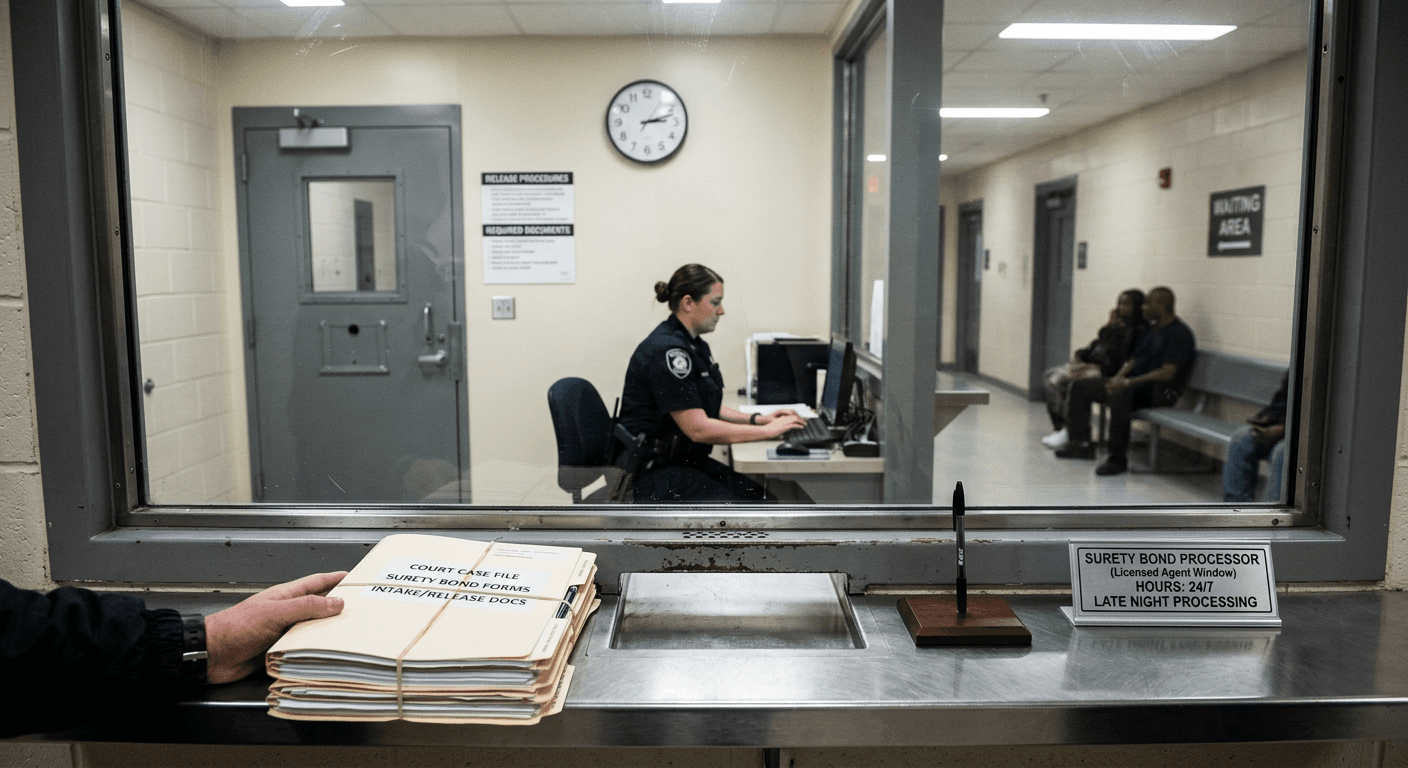
A middle-of-the-night phone call from a holding cell forces a rapid education on cash bond vs bail. When the automated voice cuts out and the defendant reads off a dollar amount set by a Minnesota court, the immediate problem is liquidity. Court schedules do not pause for bank transfer delays, and jail intake desks do not negotiate. Understanding exactly how different release mechanisms operate determines whether a defendant sleeps in their own bed or waits out the weekend in custody.
Quick Summary
Choosing between different release mechanisms comes down to upfront liquidity, timeline, and court conditions. A cash bond requires depositing the full bail amount directly with the court, while a surety bail bond replaces that massive upfront cost with a legally regulated down payment backed by an agency guarantee.
- Surety bonds bypass the need to liquidate personal savings by leveraging commercial backing.
- Cash bonds demand the entire bail amount upfront but return the balance after court fines are settled.
- Unconditional bonds cost slightly more upfront but remove daily ankle monitor restrictions.
- Unsecured bonds require no upfront cash but rely entirely on judicial discretion at arraignment.
Table of Contents
- How to Choose the Right Release Path
- 1. Standard Surety Bail Bonds
- 2. Full Cash Bonds
- 3. Unsecured Signature Bonds
- 4. Secured Property Bonds
- 5. Unconditional DWI Bonds
- Choosing Based on Your Situation
- Recommended Reads
| Bond Type | Financial Requirement | Features | Pros | Cons | Target Audience |
|---|---|---|---|---|---|
| Standard Surety Bail Bonds | Third-Party Backed | Commercial guarantee, regulated down payment, fast processing | Preserves personal savings, fast overnight release, structured payments | Premium is non-refundable, requires a co-signer | Families lacking immediate cash for the full bail amount |
| Full Cash Bonds | Direct Full Payment | 100% court deposit, held in trust, applied to fines | No third-party fees, remainder is refunded, simple transaction | Ties up total liquidity, vulnerable to court fee deductions, takes months to refund | Defendants with trivially low bail amounts and deep reserves |
| Unsecured Signature Bonds | Court Discretionary | Judicial release, signed promise to appear, no upfront money | Completely free upfront, no middleman, immediate release post-hearing | Cannot be purchased, requires waiting in custody for a judge, unpredictable | First-time, low-level offenders who can wait for arraignment |
| Secured Property Bonds | Asset Backed | Real estate lien, title search required, high equity demand | Covers massive bail amounts, no cash out of pocket | Takes weeks to finalize, requires extensive paperwork, risks foreclosure | Federal defendants with massive bail and significant property equity |
| Unconditional DWI Bonds | Third-Party Backed | Maximum statutory bail, removes pre-trial check-ins, eliminates EHM | Preserves daily employment, avoids monitor fees, restores normal routine | Higher total bond amount, slightly higher premium | Employed individuals who cannot accommodate an ankle monitor |
How to Choose the Right Release Path
Navigating a Minnesota jail release requires understanding how the court views the money securing the defendant's appearance. The classification axis that separates these options is the Financial Requirement. Every release mechanism falls into one of four distinct categories along this axis, dictating who you pay and when the defendant gets out.
The Third-Party Backed category involves a commercial agency stepping between the defendant and the court, guaranteeing the full bail amount in exchange for a smaller upfront premium. The Direct Full Payment category requires the defendant's family to act as their own bank, handing the entire bail balance directly to the jail lobby. The Court Discretionary category removes upfront money entirely, relying on a judge's assessment of flight risk during a formal hearing. Finally, the Asset Backed category uses physical real estate equity instead of cash, acting as a mortgage against freedom.
Evaluating these categories requires looking at the clock. If the arrest happens on a Friday night in Isanti County, a discretionary release is impossible until Monday morning, leaving only third-party or direct payment options on the table.
1. Standard Surety Bail Bonds
The primary bottleneck most families hit during an arrest is the sheer size of the court's financial demand, which standard surety bonds immediately remove. Falling into the Third-Party Backed category, this mechanism replaces the need to wire thousands of dollars to a government clerk with a commercial guarantee.
Instead of paying the jail the full bail amount, you sign a contract with a state-licensed agency. The agency posts the total bond with the court, securing the release. In return, you pay a premium. By law, 3%-5% down on qualifying bonds, no credit check, flexible payment plans dictate how these initial payments are structured in Minnesota. The agency assumes the financial risk if the defendant fails to appear, which is why they require a co-signer (the indemnitor) to guarantee the contract. For families navigating an arrest handled through Anoka Bail Bonds | Anoka Jail | 651-402-4868, this leverages commercial backing to bypass retail banking limits.
Commercial leverage bypasses retail banking delays
Practical rule: Confirm the exact holding facility before starting the paperwork; a warrant executed in one city might result in the defendant being held in a neighboring county's jail, changing where the bond must be delivered.
The structural limit of this approach is that the premium paid to the agency is strictly non-refundable. If the prosecutor drops the charges at the very first hearing, or the judge dismisses the case entirely three days later, the money paid for the bond remains with the agency, as the service of securing immediate release was already fulfilled.
I would choose this if the court's total bail amount exceeds what can be comfortably withdrawn from a bank account in the middle of the night without triggering fraud alerts or jeopardizing next month's rent.
Pros
- Removes the requirement to deposit the full bail amount
- Facilitates rapid releases outside of standard court hours
- Preserves emergency cash reserves for legal defense fees
Cons
- The premium paid is a sunk cost
- Requires a willing co-signer to accept legal liability
- Subject to specific check-in conditions set by the agency
2. Full Cash Bonds
Families staring at a manageable bail figure often ask why they should involve a middleman if they have the necessary funds sitting in a checking account. This approach defines the Direct Full Payment category, where the court deals strictly with the poster and holds the entire financial leverage.
Look at the literal transfer of funds. The defendant or a family member hands the full bail amount in cash or cashier's check directly to the court administrator or jail intake staff. Researching cash bonds jail procedures reveals this process. The county holds this money in a trust account for the duration of the trial. If the defendant appears at all mandatory hearings, the money is eventually released.
Total liquidity ties up your emergency reserves
The court treats deposited money as a general ledger for the defendant's future liabilities. Deductions occur automatically. When the case concludes, the court deducts administrative fees, mandatory surcharges, and any imposed fines. Then it cuts a refund check. The county mailing process for that remainder often takes several weeks after the final gavel falls. Your money stays locked out of reach long after the legal threat has passed.
Use this route solely when the bail amount is trivially low and handing it over in full will not impact your ability to retain a private defense attorney.
Pros
- Avoids paying non-refundable premiums to a third party
- Involves no commercial contracts or co-signers
- The remaining balance is eventually returned to the poster
Cons
- Demands massive upfront liquidity immediately
- The court deducts all fines and fees from the deposit
- Refund timelines are slow and bureaucratically delayed
3. Unsecured Signature Bonds
The most common mistake families make is sitting in a jail lobby for hours, assuming they can simply request a signature release from the intake deputies. Operating strictly within the Court Discretionary category, this option bypasses financial deposits entirely but requires a judge's explicit authorization.
Families waiting in the lobby often ask what is an unsecured bond mean for immediate release. Legally, it means the defendant signs a civil contract promising to pay a specified dollar amount only if they fail to appear in court. The core difference in a signature bond vs cash bond is that the former requires zero dollars upfront to walk out the door. When weighing secured bail vs unsecured, the court evaluates flight risk, local ties, and criminal history during the arraignment hearing to determine if a financial deposit is even necessary.
Judicial discretion operates on court time, not your time
This mechanism entirely removes your agency from the timeline; you cannot trigger, purchase, or accelerate it. Because it requires a judge, a defendant arrested on a Friday evening must sit in a cell until the court opens for arraignment on Monday or Tuesday morning, depending on holiday schedules.
Accept this path if a judge unilaterally offers it during a weekday arraignment, but never build a weekend release strategy around hoping the court feels lenient.
Pros
- Requires zero upfront money to secure release
- Carries no third-party premiums or hidden fees
- Leaves all personal savings intact for legal representation
Cons
- Impossible to secure outside of standard judicial hearings
- Requires waiting in custody until the first court appearance
- Highly unpredictable and rarely granted for severe charges
4. Secured Property Bonds
A lien physically recorded against your home's equity in the county where the property sits serves as the ultimate guarantee. Falling under the Asset Backed category, this method leverages real estate instead of liquid cash to satisfy extreme court demands.
Instead of cash or a commercial guarantee, a property owner pledges their real estate equity to the court. The court demands an official property appraisal. A comprehensive title search must prove the absence of conflicting liens. The drafting of a mortgage instrument names the county as the beneficiary. The equity in the home must exceed the bail amount by a significant margin. This covers potential foreclosure costs if the defendant flees.
Real estate appraisals move slower than custody clocks
Title searches, appraisals, and judicial reviews take weeks to finalize. This makes the property bond completely useless for getting someone out of an overnight hold at a facility handled by Chisago Bail Bonds | Center City Jail | 651-402-4868, where speed is the primary objective of the family.
Reserve this cumbersome process exclusively for federal indictments or massive bail amounts where standard commercial limits are exceeded, and the defendant is already prepared to remain in custody for several weeks while the paperwork clears.
Pros
- Allows defendants with massive bail to leverage illiquid wealth
- Avoids liquidating retirement accounts or business assets
- Keeps the premium money within the family's equity
Cons
- The administrative process takes weeks to complete
- Requires paying out of pocket for appraisals and title searches
- Places the family home at direct risk of county foreclosure
5. Unconditional DWI Bonds
A third-degree driving while impaired charge instantly triggers mandatory Electronic Home Monitoring (EHM) unless a specific financial barrier is cleared. Operating within the Third-Party Backed category, this specialized surety targets the restrictive pre-trial conditions unique to Minnesota law.
Minnesota courts establish a dual-bail system for severe driving infractions. The judge sets a lower "conditional" bail amount that forces the defendant to wear an ankle monitor, submit to random urinalysis, and check in regularly. Simultaneously, they set a much higher "unconditional" maximum-statutory bail amount. By posting a surety bond for this higher unconditional figure through a specialized provider like DWI Bail Bonds by James: Call 651-402-4868 Now, the defendant buys their freedom from the restrictive monitoring program.
Buying out of pre-trial conditions preserves daily employment
Practical rule: Calculate the daily rental fee of an ankle monitor over an eight-month trial period before assuming the lower conditional bail amount is actually the cheaper option.
The trade-off here is the outright cost. Because the unconditional bail amount is set at the statutory maximum for a gross misdemeanor, the required premium paid to the agency is inherently higher than the premium for the conditional release amount.
I would opt for this specialized bond when the defendant's employment requires unmonitored travel or when the daily fees of maintaining an ankle monitor over a long trial will outpace the higher upfront premium.
Pros
- Completely eliminates the need for Electronic Home Monitoring
- Removes mandatory urinalysis and frequent court check-ins
- Prevents an ankle monitor from alerting employers to the arrest
Cons
- Based on a significantly higher total bail amount
- Requires a larger upfront premium payment
- Demands a stronger co-signer due to the higher liability
Choosing Based on Your Situation
Mapping out a release strategy requires matching your immediate constraints against the realities of the Financial Requirement categories.
If the primary bottleneck is a lack of liquid cash at 2:00 AM, the Third-Party Backed category is the most reliable path. Standard surety bonds allow families to manage the crisis through structured payments rather than draining emergency funds. This is especially vital when navigating intake centers like Saint Louis Bail Bonds | Duluth Jail | 651-402-4868, where distance and time make immediate cash deposits impractical.
If the bail is minimal, the arrest is localized, and tying up a few hundred dollars will not affect your ability to hire a lawyer, the Direct Full Payment category removes the middleman. A cash bond ensures that, eventually, the remaining funds will return to you after the county takes its administrative cut.
If the arrest happens on a weekday morning and the defendant has deep community ties with no prior record, the Court Discretionary category might activate. While you cannot plan for an unsecured signature bond, accepting it when the judge offers it at arraignment is always the correct move.
Finally, if the court mandates an ankle monitor that threatens the defendant's commercial driver's license or daily employment, pivoting back to the Third-Party Backed category for an unconditional DWI bond is necessary. The higher premium protects the defendant's ability to earn a living while fighting the case.