How to Pay the Bail in Minnesota: Locating Inmates and Securing Release
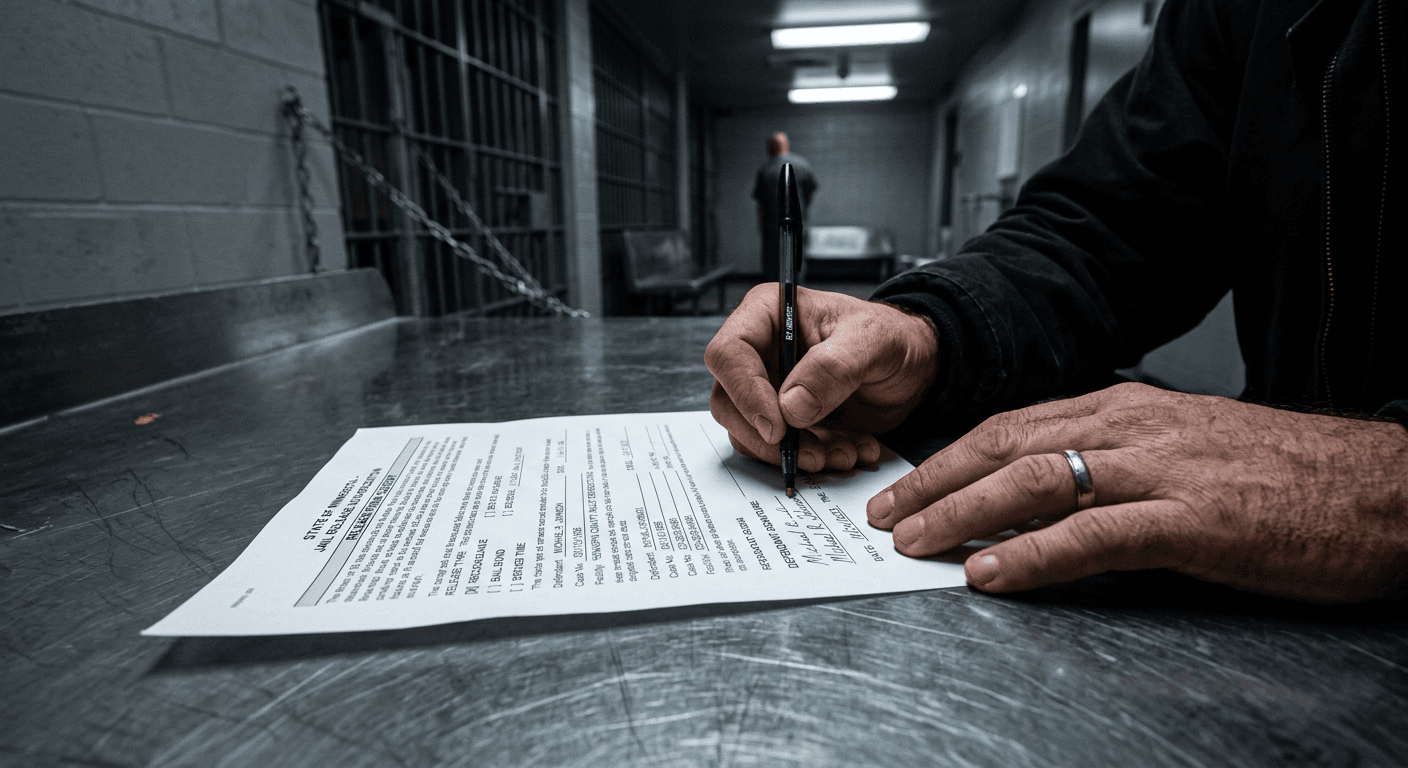
A dispatcher opens the queue on a Saturday morning and sees three frantic messages from a family trying to pay the bail for a relative booked overnight. The family has already driven to two different county facilities, attempted to hand cash to a desk sergeant during a facility lockdown, and completely drained their primary checking account in the process. Navigating a Minnesota county jail system while an arrest is actively unfolding requires verifying the exact facility first, understanding the difference between a conditional and unconditional release, and executing a surety bond that bypasses severe pretrial restrictions.
Quick Summary
Paying bail to secure someone's release in Minnesota involves locating the specific county facility, retrieving the booking details, and executing a surety agreement rather than paying the full cash amount directly to the court. Using a licensed bondsman allows families to post a bond for a fraction of the total required amount while bypassing restrictive release conditions.
- Pinpoint the exact county jail and wait for the booking process to conclude before initiating payment.
- Choose unconditional bail bonds to prevent the court from imposing electronic home monitoring or travel bans.
- Understand that Minnesota regulations strictly govern financing costs and down payments.
- Time the delivery of the paperwork to avoid jail shift changes that freeze all releases.
Table of Contents
- 1. Locating the Detainee to pay the bail
- 2. Decoding the Release Conditions Imposed by the Court
- 3. Calculating Costs and Securing the Financing
- 4. Executing the Bond at the County Facility
- 5. Verifying Court Obligations After Release
- Common Pitfalls & Troubleshooting
- FAQ
- Recommended Reads
1. Locating the Detainee to pay the bail
Before any financial transaction can occur, you must confirm exactly where the individual is being held and whether the facility has formally entered their charges into the system. Minnesota counties operate distinct facilities, and a defendant arrested on a highway border might end up in the Kanabec County Jail rather than the Pine County Jail.
Why Online Rosters Provide Incomplete Initial Data
The most common error families make is aggressively searching for inmate bail information the moment they hear about an arrest. When someone arrives at a facility, they enter a mandatory booking phase. The jail staff must inventory personal property, conduct medical screenings, capture LiveScan fingerprints, and run those prints through the National Crime Information Center (NCIC) database to check for out-of-county warrants. This process takes several hours.
During this window, the state's VINELink system or the local county roster will likely show no record of the individual, or it will list them as "pending classification" with no bail amount attached. If you try to dispatch a bondsman right away, the facility will simply turn them away because no release order can be generated until booking concludes.
To pull accurate bail information on an inmate, you must wait for the fingerprint return. If the arrest stems from an active warrant, the bail amount is usually pre-set on the warrant itself. If it is a new charge, the individual must either wait for a judge to set bail at an arraignment hearing, or the facility will apply a standard bail matrix based on the offense. You can check the Minnesota Court Records Online (MCRO) portal to see if a judge has formally issued a release order before you initiate a contract.
2. Decoding the Release Conditions Imposed by the Court
Once the bail amount is published, families are often confused to see two different numbers listed on the roster. Minnesota judges routinely issue a two-tiered bail system: a lower amount attached to strict behavioral conditions, and a higher maximum amount that drops those conditions entirely.
Unconditional Bonds Remove Pretrial Restrictions
If you choose the lower conditional bail, the court retains heavy control over the defendant's daily life pending trial. For standard offenses, this might include mandatory weekly check-ins with a pretrial officer. For specialized cases like handling DWI bail bonds, conditional release almost always requires the installation of an electronic home monitoring (EHM) ankle bracelet, daily remote breathalyzer testing, random urinalysis (UAs), and a total ban on leaving the state.
Posting an unconditional bail bond means paying the higher schedule amount, which legally strips the court of its ability to impose these pretrial restrictions. The defendant is released with only one requirement: to appear at all scheduled court dates. The trade-off is the upfront cost, as unconditional bonds carry a higher face value. However, the failure mode of conditional release is steep. Defendants frequently violate technical conditions - missing a random UA or failing to charge an EHM monitor - which immediately triggers a warrant, a revocation of the release, and a return to custody without a refund of the original bail.
3. Calculating Costs and Securing the Financing
Understanding the mechanics of paying for bail dictates whether a family can actually sustain the financial impact of a criminal case. You have two avenues: paying the entire cash amount directly to the county court, or utilizing a licensed bail bondsman to post a surety bond on your behalf.
Depleting Cash Reserves Damages Your Defense Capability
If the unconditional bail is set at $12,000, paying cash directly to a facility like the Sherburne County Jail requires handing over $12,000 in certified funds. That money sits in the court's trust account for the duration of the case, which can take anywhere from six to eighteen months to resolve. If the defendant is found guilty, the court often deducts fines, surcharges, and restitution directly from that cash deposit before returning any remainder.
A surety bond operates differently. A licensed bondsman pledges the full $12,000 to the court, and the indemnitor (the family member signing the contract) pays a non-refundable premium for this service. In Minnesota, the financial threshold is strictly regulated: By law, 3%-5% down on qualifying bonds, no credit check, flexible payment plans. This structure allows the family to secure a release while keeping their primary capital liquid to hire a private defense attorney.
Practical rule: Never drain your emergency savings or retirement accounts to pay a cash bail to the court; utilize a surety bond to preserve your capital for impending legal fees.
The critical mechanism to understand here is indemnification. When you sign for a surety bond, you are guaranteeing the defendant's appearance. If the defendant absconds, the bondsman is legally obligated to pay the court the full face value of the bond, and you, as the co-signer, become civilly liable to the bondsman for that total amount.
4. Executing the Bond at the County Facility
The logistical reality of paying bail to get out of jail involves highly specific timing and physical paperwork. You cannot simply log onto a county website and authorize a credit card payment to bypass the release procedures.
Facility Lockdowns Will Halt Your Release Window
To pay a bail using a surety agent, the bondsman must physically deliver an original, stamped bond document to the jail's records division. For instance, when securing release from the Anoka jail, the agent approaches the duty window, presents the finalized paperwork, and the intake officers verify the agency's credentials against the state's approved list.
The mistake families make here is assuming that the moment the bondsman hands over the paperwork, the cell door opens. Jail administration operates on rigid schedules. If the bond is delivered at 5:45 AM, it will almost certainly hit a wall. Most Minnesota county facilities undergo a mandatory shift change and head-count lockdown between 6:00 AM and 7:00 AM, and again in the evening. During a lockdown, all inmate movement ceases. The records division will not process the bond, the property room will not return the defendant's personal effects, and the release will stall until the new shift clears the count.
You must verify the shift schedule of the specific facility - whether it is the St. Louis County Jail or the Mille Lacs facility - and aim to execute the bond well outside of meal times and shift changes to ensure a smooth, immediate release.
5. Verifying Court Obligations After Release
The transaction does not end when the defendant walks out of the jail lobby. The surety bond remains active and binding until the judge formally closes the case, dismisses the charges, or sentences the defendant.
Missing a Hearing Immediately Triggers Bond Forfeiture
As a co-signer, you must actively track the case. Relying on the defendant's memory or waiting for the court to mail a physical letter is a primary cause of accidental warrant issuances. The Minnesota court system uses the MCRO portal to update hearing dates, times, and locations. You need to pull the court file number from the release paperwork and check bail bond status online every week.
If the defendant is ten minutes late to a scheduled hearing, the judge will issue a bench warrant and declare a bond forfeiture. At this point, the court sends a notice to the bondsman demanding the full amount. The mechanism to fix this is a reinstatement, but it is time-sensitive. You must contact the bondsman immediately to file a motion to reinstate the bond, which usually requires the defendant to turn themselves back into the facility or appear as a walk-in at the court clerk's office before the forfeiture is finalized.
Common Pitfalls & Troubleshooting
When a release fails or a bond hits a sudden roadblock, the outward symptom usually looks like the jail simply refusing to let the person go. Diagnosing the exact cause dictates the fix.
Symptom: The facility accepts the bond paperwork, but hours pass and the defendant is not released. Cause: The defendant has an active hold from another jurisdiction. A person arrested in Carver County might have an outstanding bench warrant from Washington County that only appeared during the final NCIC check. Fix: Do not post another bond blindly. Have your bondsman run a statewide warrant check. The defendant must be transported to the second county, or a separate concurrent bond must be posted for the secondary jurisdiction before any facility will authorize a release.
Symptom: The online roster shows the defendant is in custody, but no bail amount is listed for days. Cause: The individual was arrested for a new charge late on a Friday. Minnesota law dictates they must be seen by a judge to have bail set, which typically happens within 36 to 48 hours, excluding weekends and holidays. Fix: Stop calling the jail records division. You must wait for the next scheduled arraignment calendar (usually Monday morning) for the judge to issue the release order.
Symptom: You receive a notice that the bond amount abruptly doubled after you already paid the premium. Cause: You paid the premium based on the initial probable cause booking, but the county prosecutor officially filed harsher, amended charges prior to the first court appearance, prompting the judge to raise the bail. Fix: This is the most common pitfall of paying too early. Wait until the formal criminal complaint is filed by the prosecutor. If this happens, you must secure a new surety bond for the difference to prevent the defendant from being remanded into custody.
FAQ
How long does a county jail take to process a release once the bond is posted? Once the jail accepts the physical surety bond from the agent, processing usually takes between one and three hours. This timeline expands if the paperwork is submitted during a facility lockdown, a meal period, or a shift change.
What happens to my down payment if the charges are completely dropped? The premium paid to a bail bondsman is non-refundable, regardless of the case outcome. This fee covers the service of executing the bond, taking on the financial liability, and securing the immediate release, all of which were successfully provided even if the prosecutor later dismisses the charges.
Can a bondsman remove electronic home monitoring conditions? A bondsman cannot directly alter a judge's order, but providing an unconditional bail bond fulfills the financial requirement that allows the court's pretrial restrictions - like electronic home monitoring - to be legally dropped.
If the defendant misses court, do I immediately owe the full bond amount? Yes, as the indemnitor, you are civilly liable for the full face value if the bond is forfeited. However, if the defendant's absence was a genuine error, the bondsman can often file paperwork with the court to reinstate the bond, provided the defendant immediately reappears before the judge.