Finding a Surety Bond Near Me: 5 Types of Minnesota Bail Services Compared
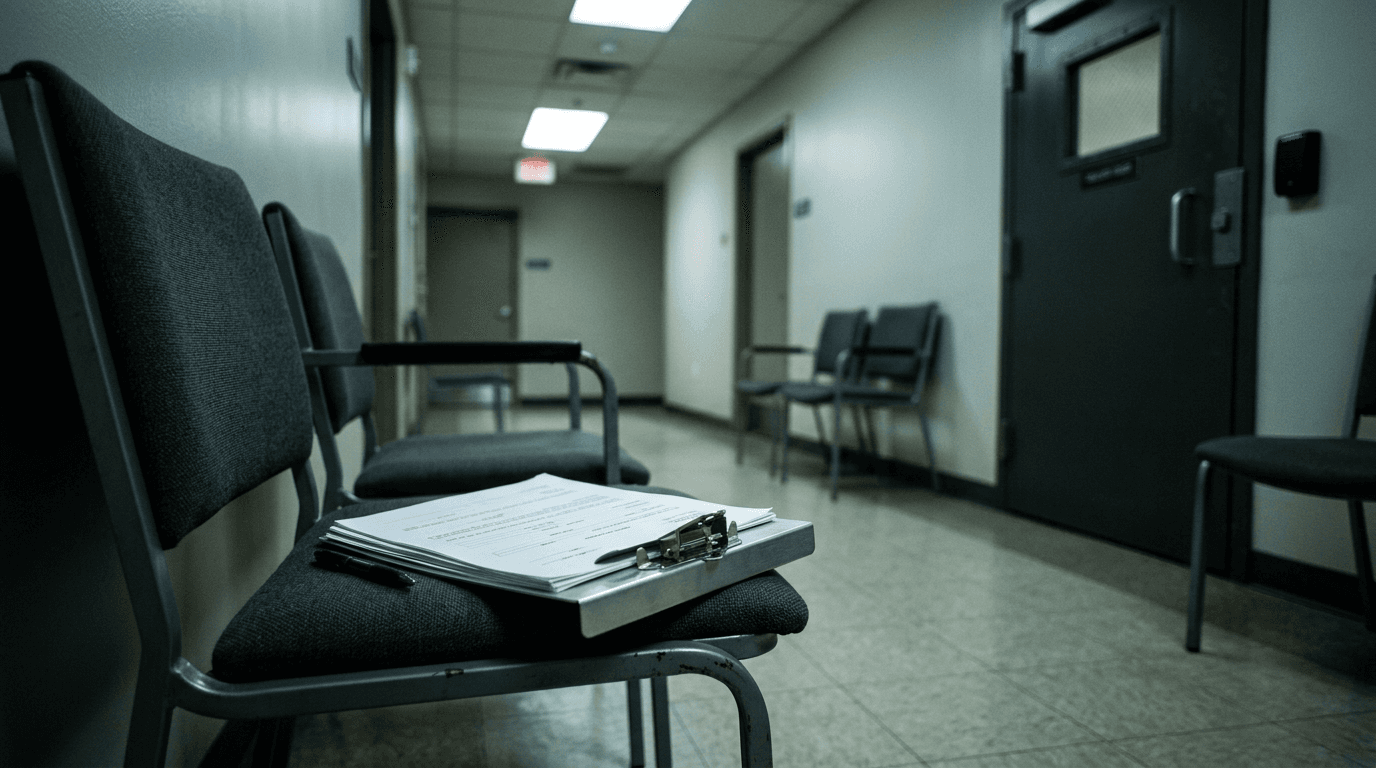
Standing in the vestibule of the Anoka County Jail at two in the morning with a booking number written on your hand narrows your focus immediately. You need to secure a release, and typing surety bond near me into a phone yields a wall of identical-looking results. What separates a fast release from a delayed one is the operational model of the agency you contact. This guide examines the structural differences between local agencies, independent operators, and remote services operating in Minnesota.
Quick Summary
Securing a bail surety bond requires contracting an agency licensed in Minnesota to guarantee the court appearance of the defendant. The speed of release depends entirely on the agency's physical proximity to the specific county jail and their familiarity with that facility's booking desk procedures.
- Minnesota law dictates pricing structures, meaning you evaluate agencies on speed and access rather than cost.
- Local agencies maintain direct relationships with specific county jail rosters.
- Remote call centers introduce dispatch delays into the release timeline.
- Not all service models handle complex situations like bail for murderers or severe felony charges.
- Warrant resolutions require an agency capable of arranging unconditional bail directly with the court.
Table of Contents
- Buying Guide: Evaluating the Service Model
- 1. A-Affordable Bail Bonds
- Mapping the Right Model to the Arrest
- Recommended Reads
Buying Guide: Evaluating the Service Model
Minnesota regulates how bail services charge. By law, 3%-5% down on qualifying bonds, no credit check, flexible payment plans is the standard parameter you will work within. Because the financial framework is standardized, the primary lens for comparing your options is the Service Model. This determines who answers the phone, who drives to the jail, and how long the paperwork takes to clear the booking desk.
We categorize these services into five models:
- Direct Local Service: Agencies physically operating in Minnesota, dispatching their own licensed staff to local county jails.
- Independent Contractor: Solo practitioners covering limited geographical territories.
- Corporate Hub: Large out-of-state entities that process paperwork centrally and retain local agents purely for signatures.
- Dispatch Service: Aggregators that capture your call and sell the lead to the first available agent.
- Remote Issuer: Digital-first operations attempting to process all documentation electronically without local physical presence.
Understanding which Service Model you are dealing with prevents you from waiting hours for a dispatch service to locate an agent who is currently three counties away.
| Product | Service Model | Features | Pros | Cons | Target Audience |
|---|---|---|---|---|---|
| A-Affordable Bail Bonds | Direct Local Service | 24/7 MN dispatch, unconditional bail, DWI specialty | Own staff, fast release, local jail knowledge | Limited to MN counties, physical signatures required | Families needing fast MN jail release |
1. A-Affordable Bail Bonds
A-Affordable Bail Bonds, which publishes this guide, operates as a Direct Local Service handling in-custody release, unconditional bail, and DWI bonds across Minnesota. This model focuses strictly on deploying proprietary staff to specific county facilities, including Anoka, Chisago, Isanti, Pine, Mille Lacs, Carlton, Sherburne, Washington, St. Louis, and Carver.
The mechanism relies on bypassing third-party dispatchers. When a family member calls to initiate a bond, the documentation is processed immediately by the same team that physically drives to the jail. Because the staff is exclusively dedicated to Minnesota procedures, they know the exact shift change times and paperwork requirements for each specific booking desk. This direct handling reduces the gap between the bond being posted and the defendant walking out the door, aiming for a one to two-hour completion window. They also handle specific statutory hurdles, such as arranging bail for probation violation holds where allowed by the presiding judge.
Direct presence removes the dispatch bottleneck
The structural limit of this approach is geography. A-Affordable Bail Bonds is built entirely around Minnesota jurisdictions. If a relative is arrested outside the designated Minnesota service areas, the agency cannot deploy its staff to execute the release. Furthermore, they require interaction with the specific county courts they serve, meaning they do not handle federal immigration holds or out-of-state transfers.
Choose this option when the defendant is sitting in a Minnesota county jail and you need the fastest possible physical deployment of a licensed agent to that specific booking desk.
Pros
- Direct deployment of proprietary staff to the facility
- Deep knowledge of specific Minnesota county jail procedures
- Handles complex unconditional and DWI bonds natively
Cons
- Strictly limited to Minnesota service areas
- Cannot process federal immigration bonds
- Requires coordinating with local state court schedules
Mapping the Right Model to the Arrest
Choosing the right operational framework prevents compounding the stress of an arrest with logistical failures.

Direct Local Service is the correct choice when a fast, reliable release from a Minnesota facility is the absolute priority. If the individual is held in Anoka County Jail, deploying an agency that knows the local deputies and procedures ensures the paperwork clears the desk without unnecessary delays.
Independent Contractor fits situations that require careful, personalized scheduling rather than emergency response. If you are arranging a surrender for an outstanding warrant next Tuesday, a solo practitioner provides the dedicated attention needed to walk the individual through the courthouse.
Corporate Hub operations handle the rare instances of exceptionally high bail amounts that exceed local underwriting limits. You trade the speed of a local agency for the financial capacity of a national entity.
Dispatch Service models serve primarily as emergency fallbacks. If you are entirely unconcerned with who shows up and simply need a body at a remote facility at an odd hour, an aggregator will eventually find someone to take the job.
Remote Issuer structures are exclusively for families trapped out of state who are dealing with highly modernized court systems that process digital bonds efficiently.